„Dimitrie Cupovski“ 13, 1000 Skopje +38923244000 ic@mchamber.mk
„Dimitrie Cupovski“ 13, 1000 Skopje +38923244000 ic@mchamber.mk
.jpg)
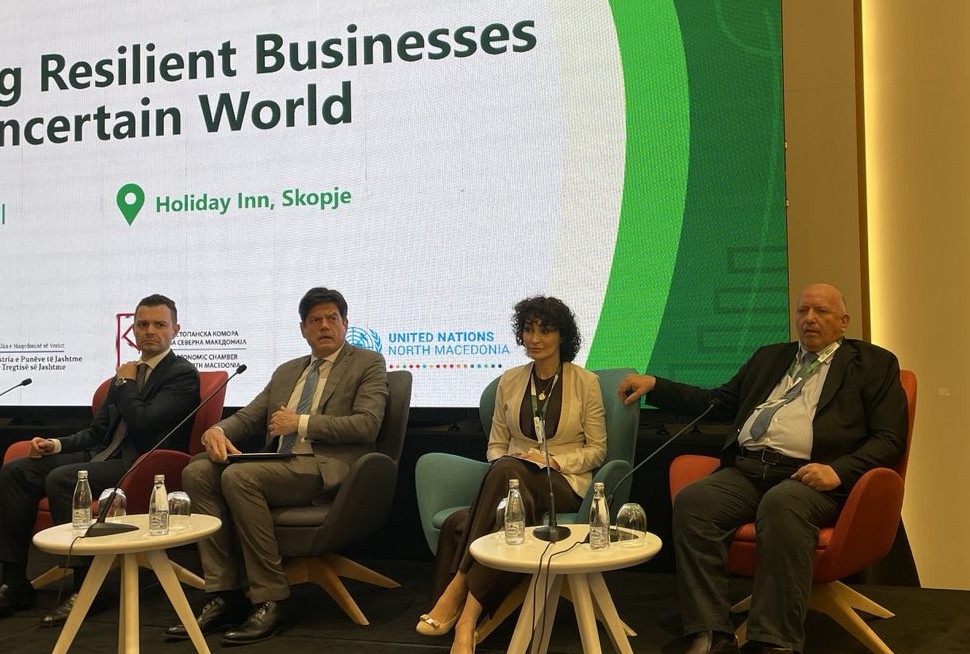
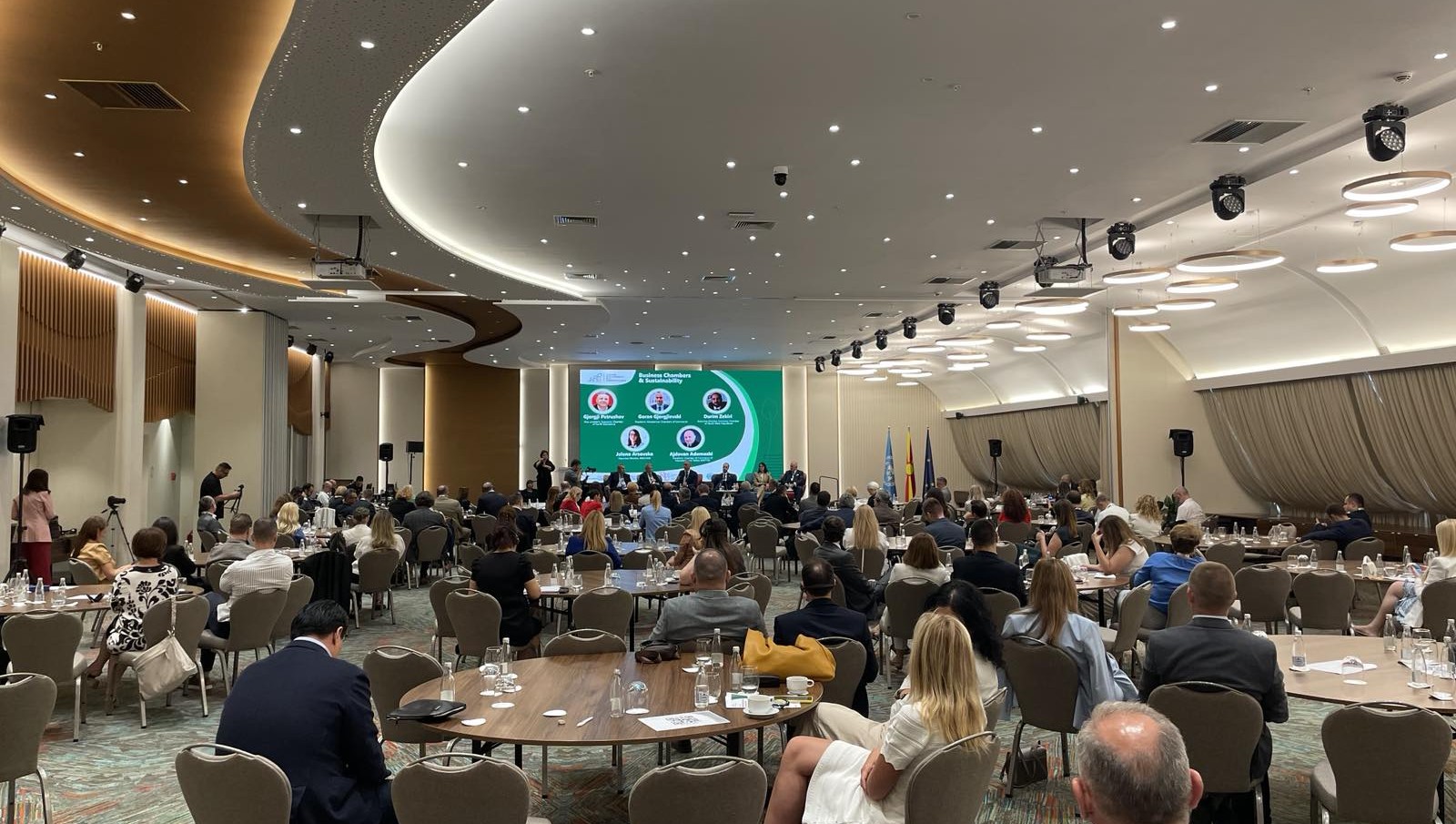
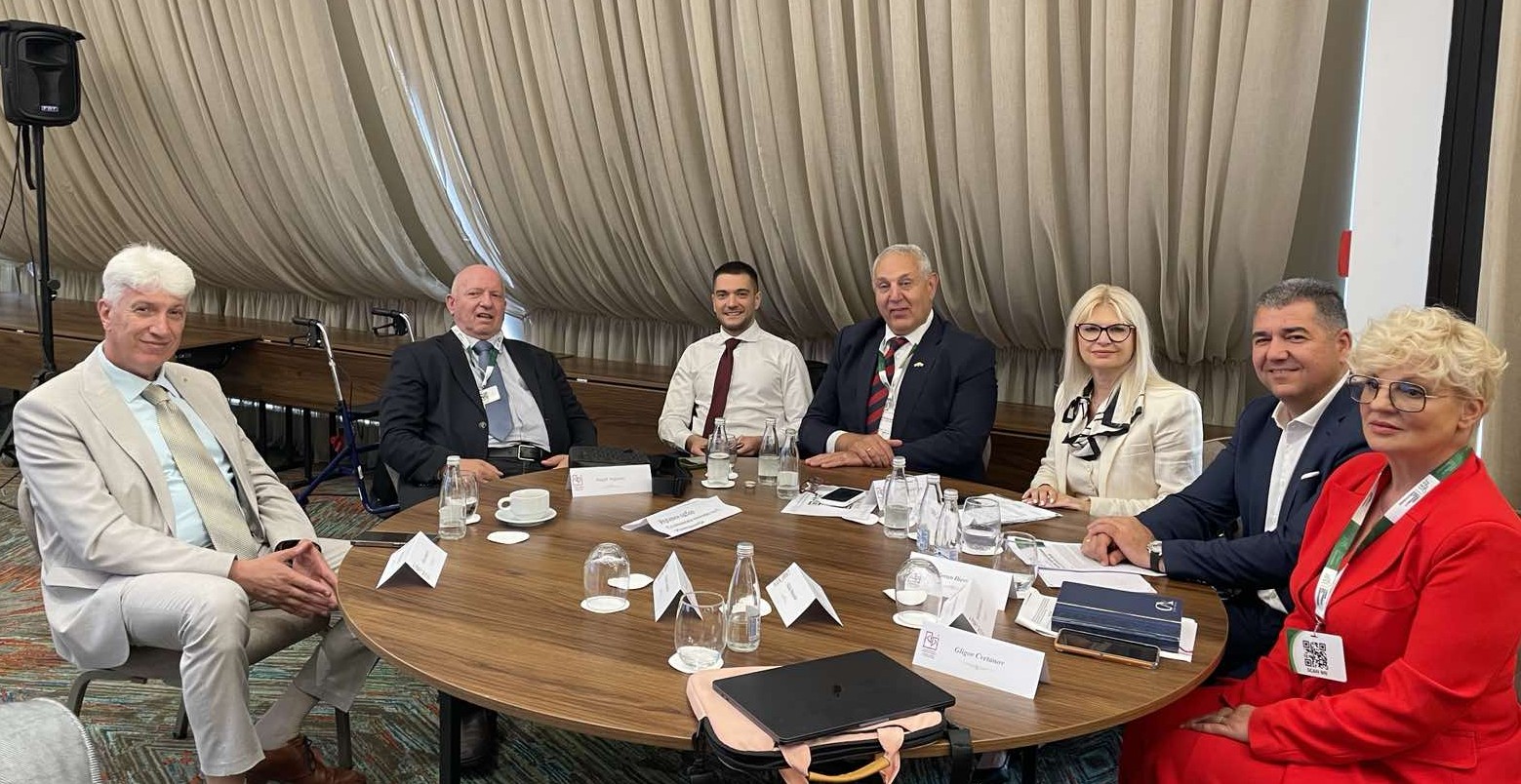
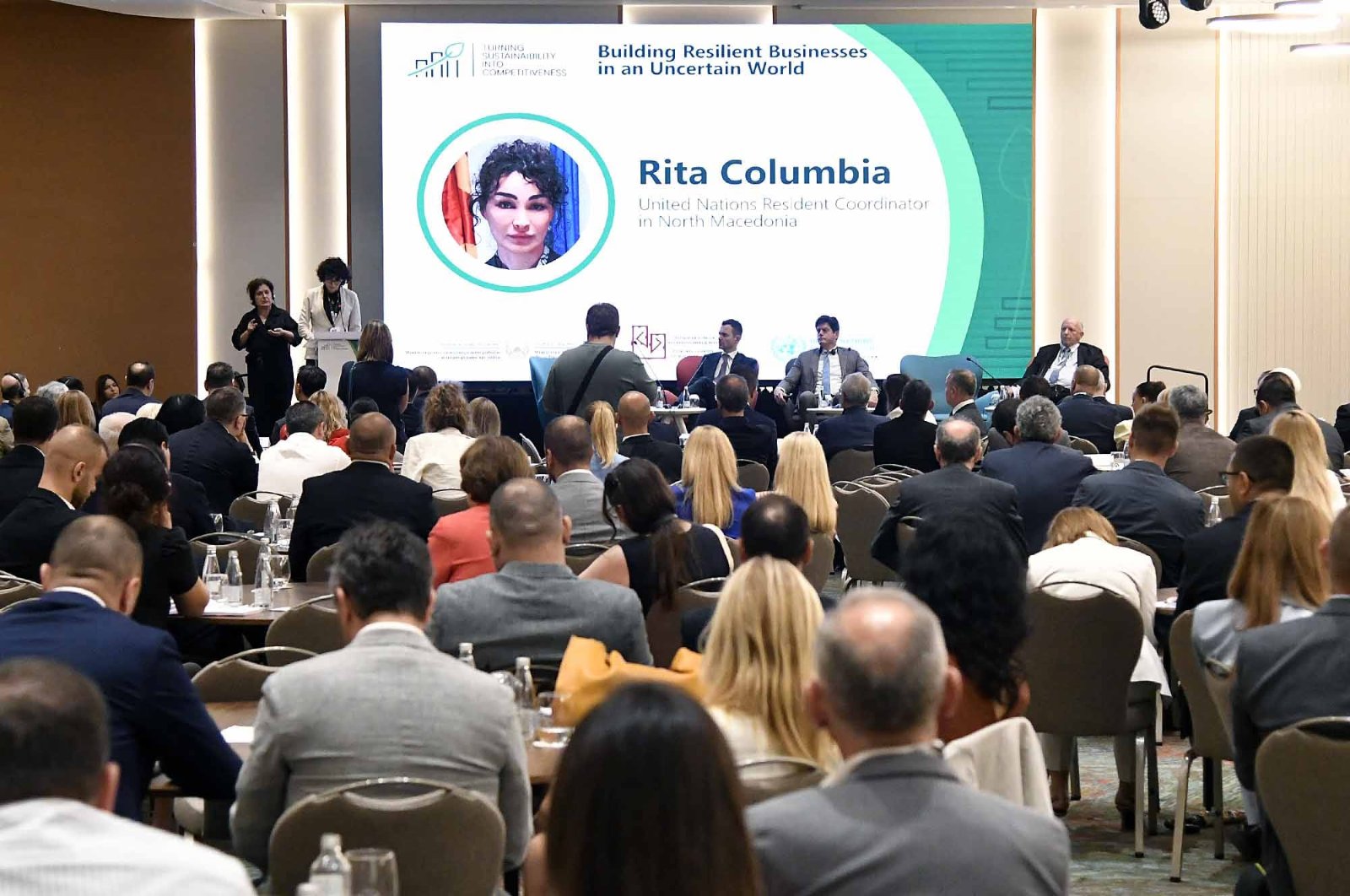
Opening borders, combating corruption and informal economy, supporting exports, gas infrastructure construction, and ensuring continuity in legislation remain key priorities of Macedonian businesses, stated Branko Azeski, President of the Economic Chamber of North Macedonia, at the conference “Turning Sustainability into Competitiveness: Building Resilient Businesses in an Uncertain World,” organized by the United Nations Office in cooperation with the Economic Chamber of North Macedonia and the Ministry of Foreign Affairs and Foreign Trade.
In his address, Azeski emphasized that the region must cooperate much more closely and build its relations on European values.
“I have travelled throughout the Balkans; there is not a square meter I have not visited. I have met every other person and seen only green heads—nothing else green—green heads that do not understand that we need to cooperate. I believe that today we are sending a clear message on this issue. Yes, we support all essential issues, fundamental principles and values, but we cannot achieve this at the push of a button whenever someone decides to restart us. We will achieve it when we build solid foundations in our own country and then extend them throughout the region,” said Azeski.
He called for the opening of borders by all possible means and expressed gratitude for the Government’s support and efforts to open the gates of cooperation together with the business community.
“What is missing? What is missing is a platform of fundamental values that we will not abandon under any circumstances, namely: the fight against corruption and the grey economy, rapid gas infrastructure construction, export support, and continuity in regulations and decisions. The implementation of this platform must reach the highest level because it represents the foundation for the development of the democratic values to which we all aspire. Have we made progress in this regard? We have made tremendous progress. Naturally, emerging from an energy crisis, a financial crisis and a severe health crisis over a period of 32 years, as well as from two major crisis situations—one within our territory and one in the neighborhood—while reforming the system, is no small achievement. There is no turning back for us now; we are moving forward toward these values. At the same time, we invite the other stakeholders in the country—the Macedonian Academy of Sciences and Arts, the universities and the civil society sector—to join us so that positions serving the interests of businesses, citizens and the state can prevail,” Azeski stated.
The conference was also addressed by Prime Minister Hristijan Mickoski, who stressed that the Government remains a partner of the business community and will continue supporting companies in their green and digital transformation. As he noted, the objective is not merely higher growth, but better-quality growth based on investments, innovation, digitalization, modern education and domestic companies capable of conquering new markets.
“We will continue supporting companies in their green and digital transformation, improving access to finance, reducing administrative procedures, upgrading infrastructure, strengthening connectivity with EU markets, and developing a workforce capable of meeting the needs of modern industry. I am convinced that we have the knowledge, the capacity, an economy that wants to grow, and people who deserve a better future,” the Prime Minister emphasized.
Minister of Foreign Affairs and Foreign Trade Timcho Mucunski noted that EU markets are already setting new standards and that, for Macedonian companies—especially export-oriented ones—it is becoming increasingly important not only what they produce, but also how they manufacture it.
“It is encouraging that an increasing number of Macedonian companies are investing in energy efficiency, digitalization, innovation and modern management models. Such investments yield tangible results: lower costs, higher productivity, greater investor confidence and a stronger market position. It is particularly important that this transformation be accessible to small and medium-sized enterprises, which are the backbone of the Macedonian economy. Achieving this requires coordinated support from institutions, chambers of commerce, the financial sector and international partners. However, the companies themselves remain the primary drivers of change,” said Mucunski.
The United Nations Resident Coordinator in North Macedonia, Rita Columbia, stressed that the Sustainable Development Goals cannot be achieved without the active participation of the private sector.
“Sustainability is good for business development and growth. Investing in a more inclusive, resilient and sustainable future is not only a shared responsibility—it is also a competitive advantage that helps companies manage risks more effectively, adapt to change and operate successfully in conditions of uncertainty. This is precisely why the United Nations stands ready to be a partner to the private sector by providing knowledge, partnerships and practical tools that help companies align business success with the Sustainable Development Goals,” Columbia stated in her address.
EU Ambassador Michalis Rokas emphasized that the Government must create favorable conditions for reforms, financial institutions should support sustainable investments, and business associations should strengthen the knowledge and capacities of companies.
“The Government should also listen to the voice and recommendations of the private sector on how competitiveness can be enhanced. Universities and research institutions must provide innovation and new skills while adapting curricula to the needs of the modern economy. International partners must continue supporting this transformation. This is precisely the value of today’s forum, because together we can build a more competitive economy, a more resilient private sector and a more prosperous future for all. Along this path, the EU will continue to stand by North Macedonia as we move closer to our European future together,” Rokas stressed.
Vladimír Dlouhý, President of Eurochambres, pointed out that, as an organization bringing together chambers of commerce from 38 countries and representing more than 20 million companies, Eurochambres has certain reservations regarding EU policies on the green transition. He specifically referred to the complex regulatory requirements imposed on companies, the administrative barriers that hinder business activity, and the lack of adequate conditions for a successful green transition within the Union.
Speaking on the topic “Why Sustainability Is Becoming the New Currency of Competitiveness in a Fragmented Global Economy,” Marga Hoek warned that by 2050 there could be more plastic than fish in the oceans. She called for greater public awareness of the harmful effects of plastic, which is present everywhere around us.
The conference was attended by representatives of institutions, the business community, international organizations and academia, while the dialogue continued through several thematic working sessions.

 Progressive Academy