„Dimitrie Cupovski“ 13, 1000 Skopje +38923244000 ic@mchamber.mk
„Dimitrie Cupovski“ 13, 1000 Skopje +38923244000 ic@mchamber.mk
.jpg)
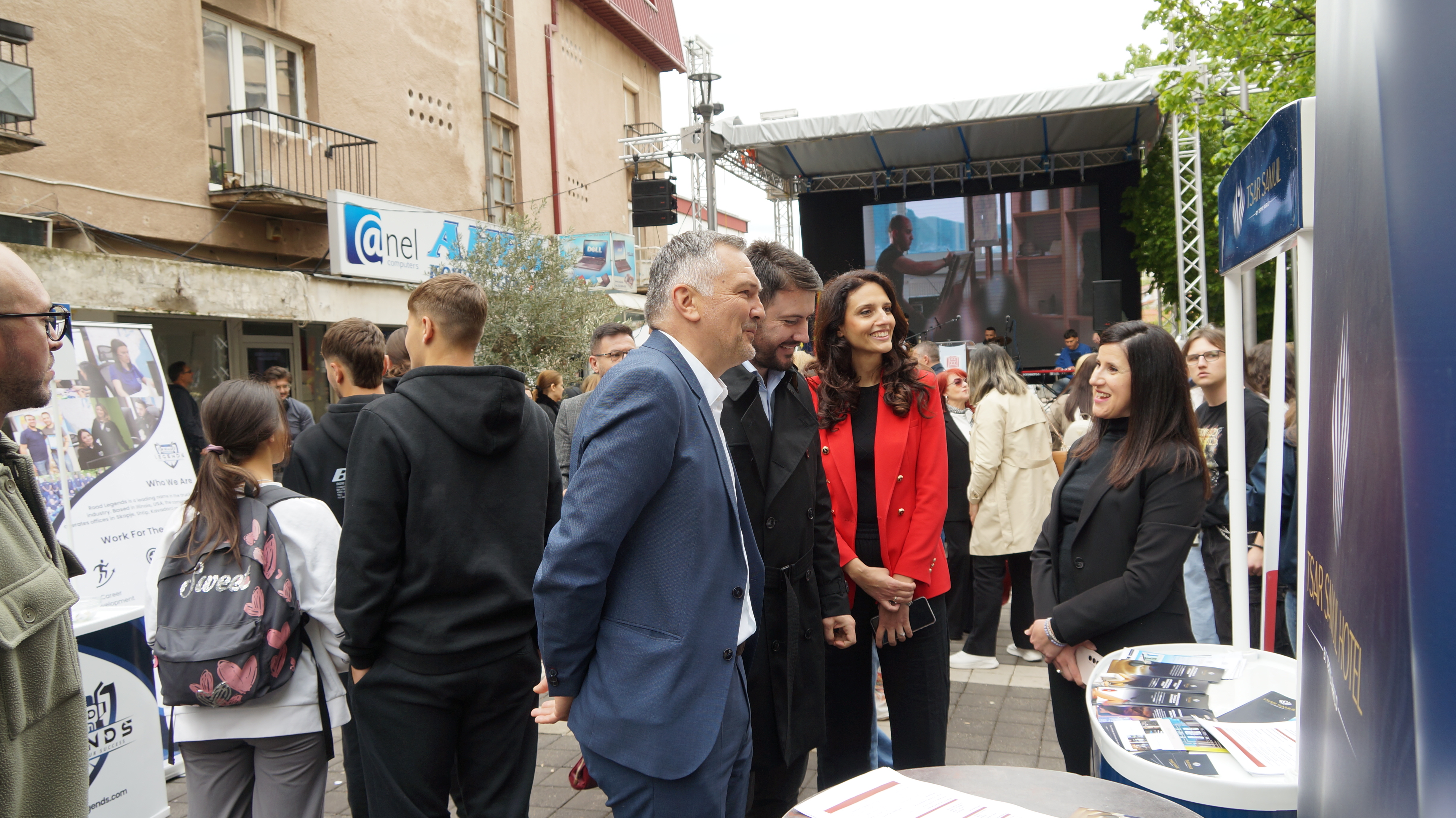
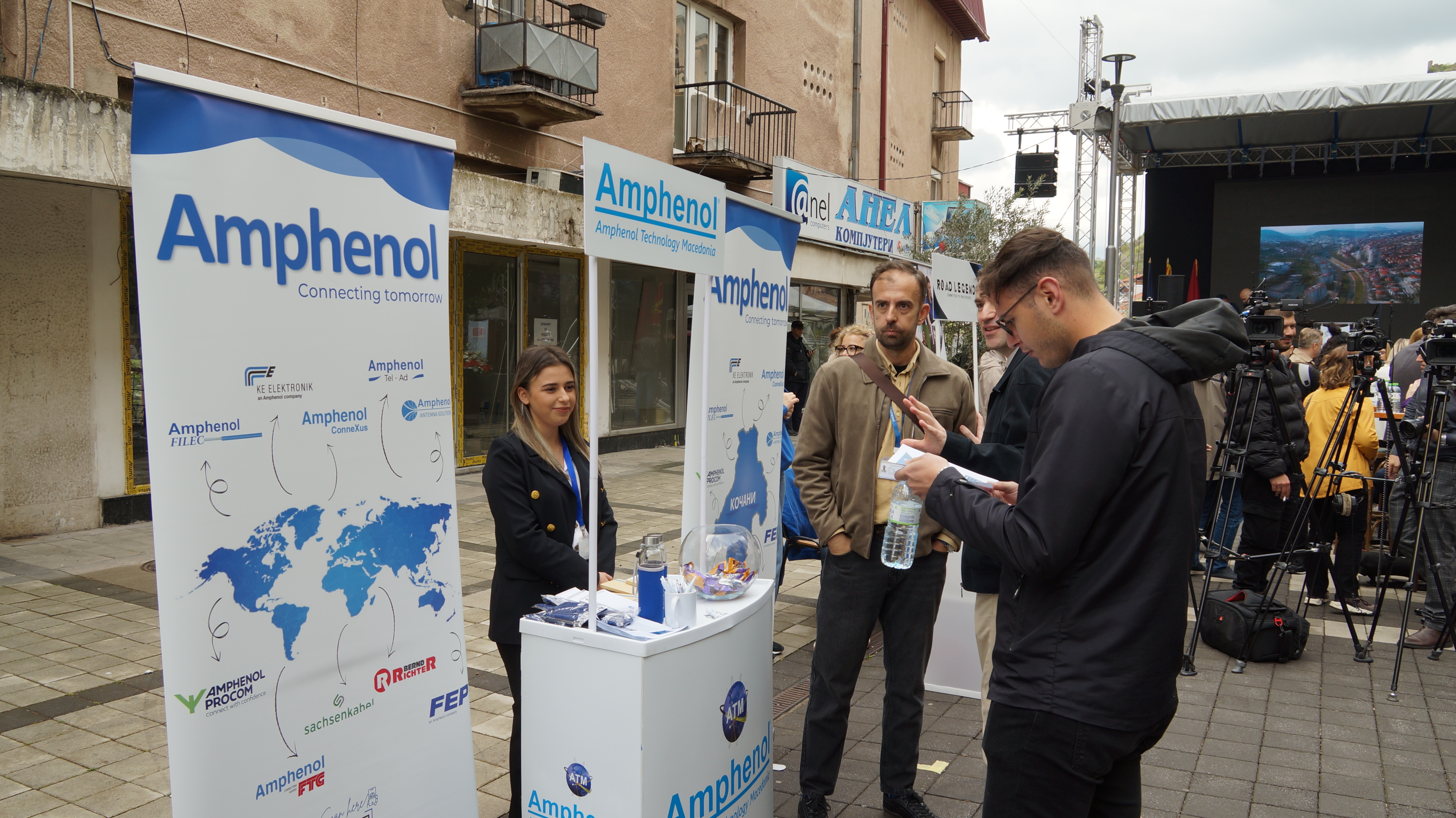
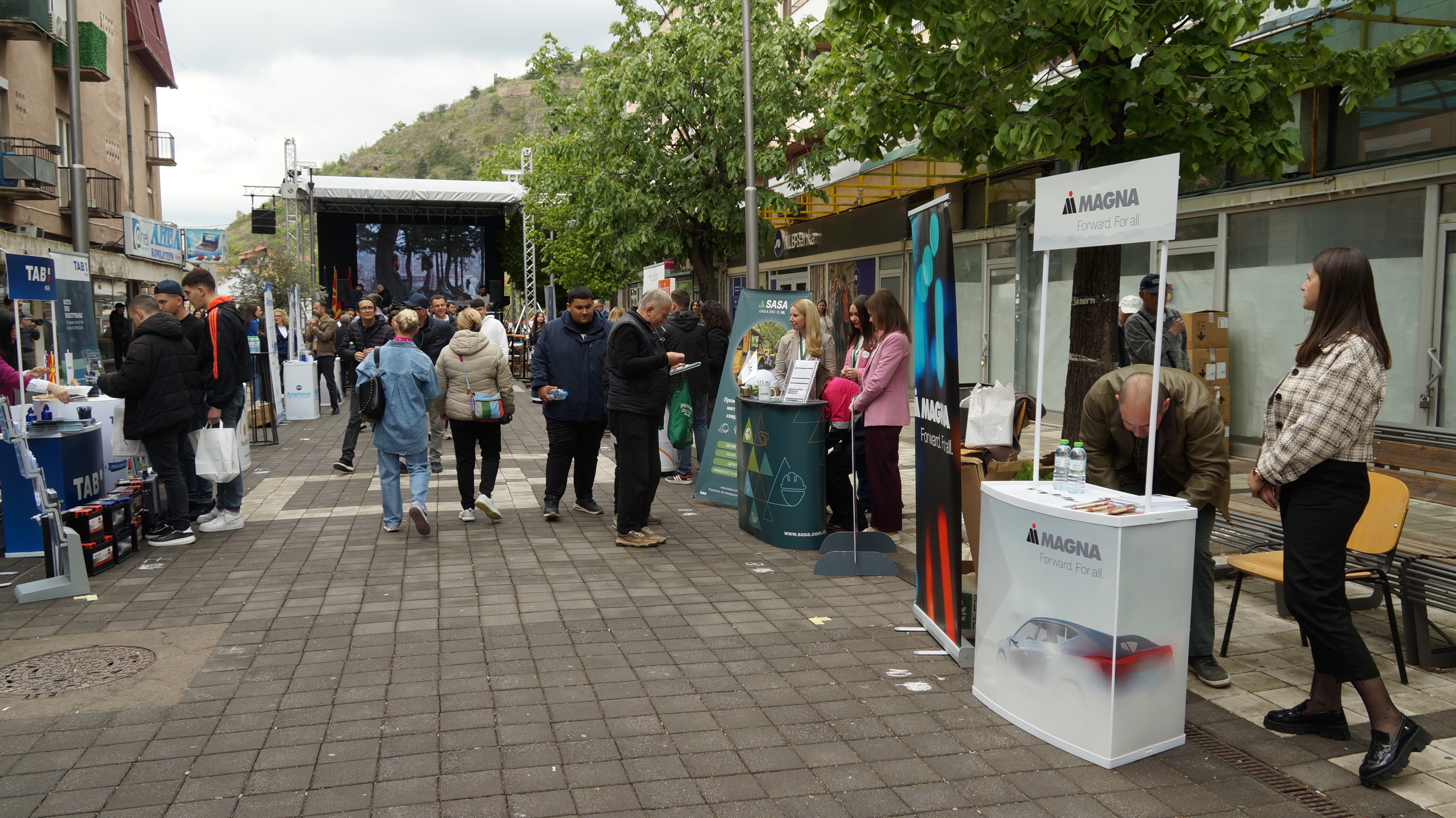
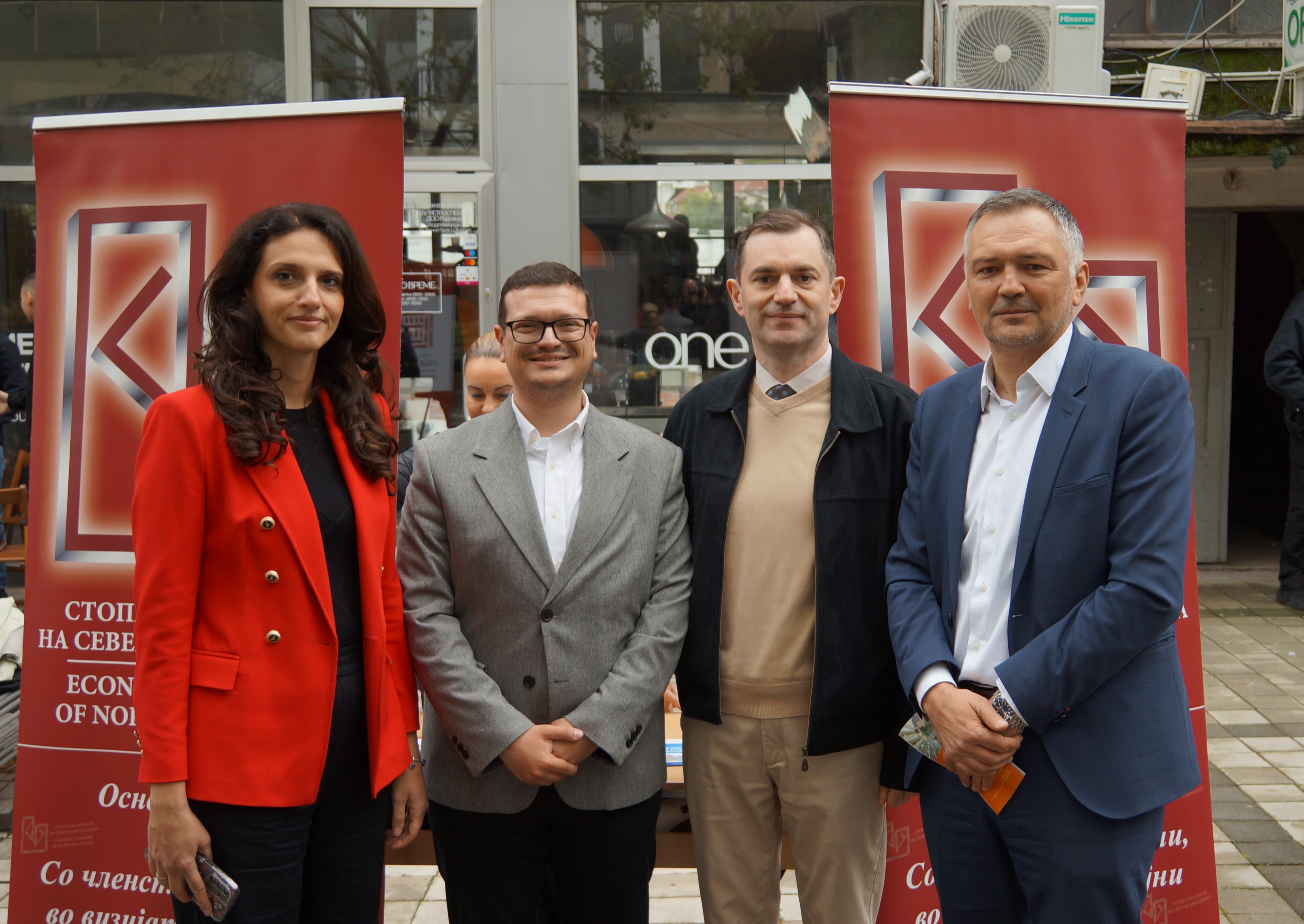
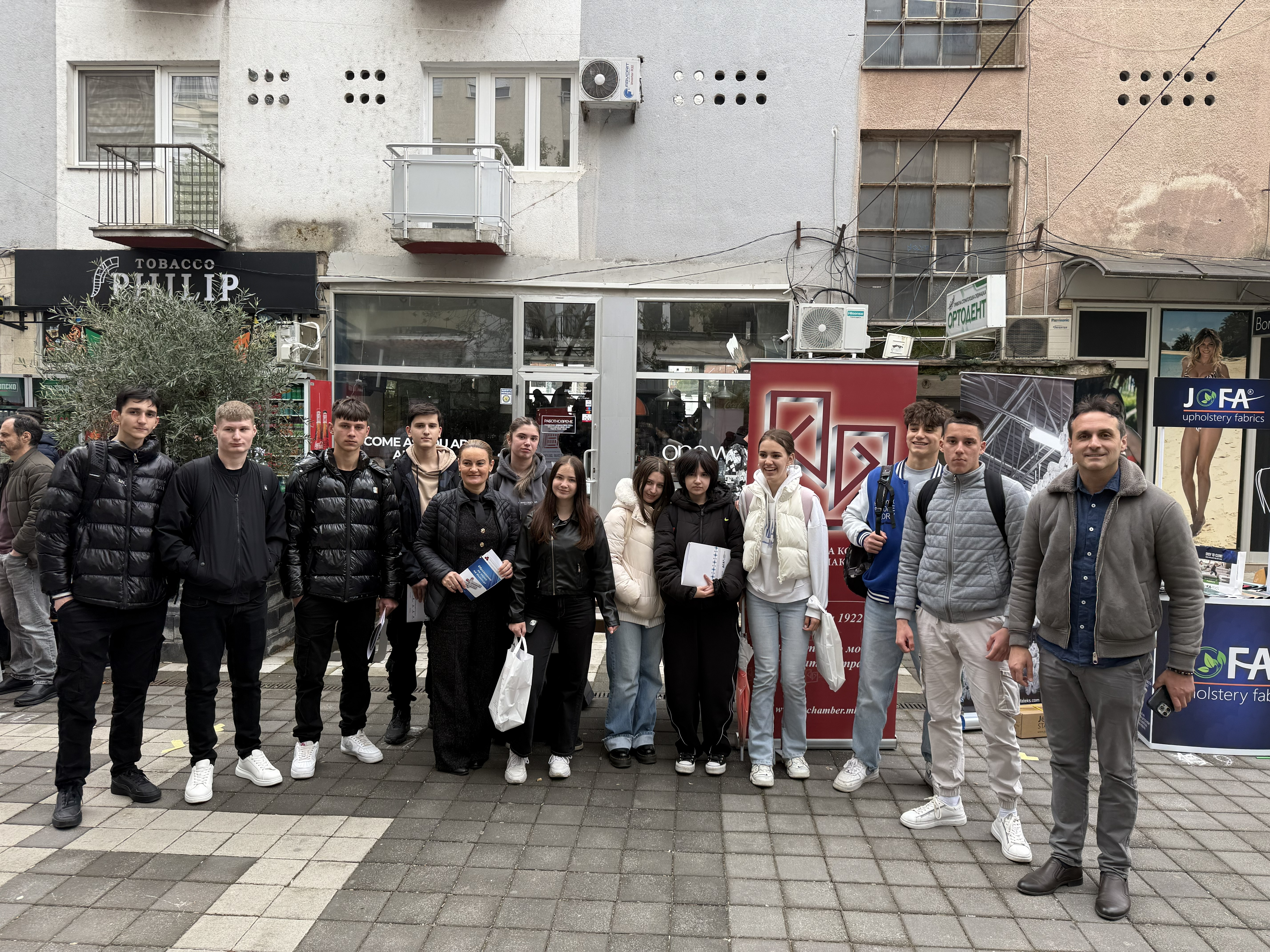
The continuity of cooperation between the academia and the business sector, aimed at jointly advancing the career development of students as future professionals, was reaffirmed through the organization of the Open and Career Day at Goce Delchev University. The event was organized by the university in cooperation with the Council for the Promotion of Higher Education and Strategic Research at the Economic Chamber of North Macedonia and the Municipality of Shtip.
The event provided an important opportunity for direct interaction between students and companies. Through this platform, graduating students were introduced to current employment and career development programs, while first-year students received information on practical training opportunities during their studies and after graduation. High school students, meanwhile, were informed about study opportunities at one of the university’s 12 faculties covering social sciences, natural sciences, medicine, and technical sciences, as well as three academies in the field of arts.
For the third consecutive year, the event has served as a meeting point where science and business come together. More than 60 companies had the opportunity to present employment prospects to future graduates. Students were able to gain first-hand insight into modern career opportunities and new job positions emerging as a result of dynamic changes across industrial sectors.
Organizers emphasized that such events are crucial for deepening cooperation between academia and the business sector, while also encouraging the professional development of future skilled labor.
The event was opened by Dr. Dejan Mirakovski, Rector of the Goce Delchev University in Shtip, who told attendees that the event offers students an opportunity to explore their career paths, while prospective students receive more detailed information about study programs to help them make informed decisions about continuing their education. He added that in recent years the university has invested in the quality of studies and the internationalization of its faculties and academies through a European association of nine universities of which UGD is a member, as well as through cooperation with the private sector. This creates an opportunity for knowledge gained at the university to be applied in practice, enabling students to become future creators of a successful and healthy society while building their future in the country, Mirakovski concluded.
On behalf of the Economic Chamber of North Macedonia, Dr. Tatjana Shterjova-Dushkovska, Operations Director for Development, Innovation, and Knowledge, addressed the audience, stressing that a diploma is only the beginning, while the real advantage comes from practical skills, critical thinking, and adaptability. Practical training and mentorship are the bridge between learning and the real world, with the business community serving as a key partner in that process. She noted that the Chamber has been working for two decades on human capital development and education reform with a clear goal: creating a workforce tailored to business needs. Only in this way, she said, can a system be built that not only responds to today’s needs but also creates the future.
The Economic Chamber of North Macedonia remains committed to achieving its strategic priorities, with business-oriented education ranking among its top goals. In the coming period, the Chamber will continue working toward three objectives in this area: changing higher education enrollment policies so that quality of knowledge and competencies become more important than student numbers; increasing business community participation in the development and revision of study programs so they align with real market needs; and establishing an independent and professional accreditation and evaluation body that will ensure quality standards based on results and relevance.
Ivan Jordanov, Mayor of Shtip, highlighted that the city’s development is directly linked to the development of the university, adding that the local government is actively working to improve conditions and make Shtip more attractive to students.
The Council for the Promotion of Higher Education and Strategic Research at the Economic Chamber of North Macedonia will continue identifying employers’ needs for higher education qualifications and serving as a bridge between the private sector and universities, encouraging new forms of cooperation that strengthen ties between science and business.
Last year’s analysis of employers’ needs for higher education qualifications found that 53% of companies already maintain some form of cooperation with faculties, particularly in the sectors of financial services, insurance, manufacturing, construction, wholesale and retail trade, and the repair of motor vehicles and motorcycles. From a regional perspective, the greatest cooperation potential was identified in the Skopje Planning Region, East Planning Region, Pelagonija Planning Region, and South-West Planning Region.
Find out more about the Analysis at this link.




 Progressive Academy