„Dimitrie Cupovski“ 13, 1000 Skopje +38923244000 ic@mchamber.mk
„Dimitrie Cupovski“ 13, 1000 Skopje +38923244000 ic@mchamber.mk
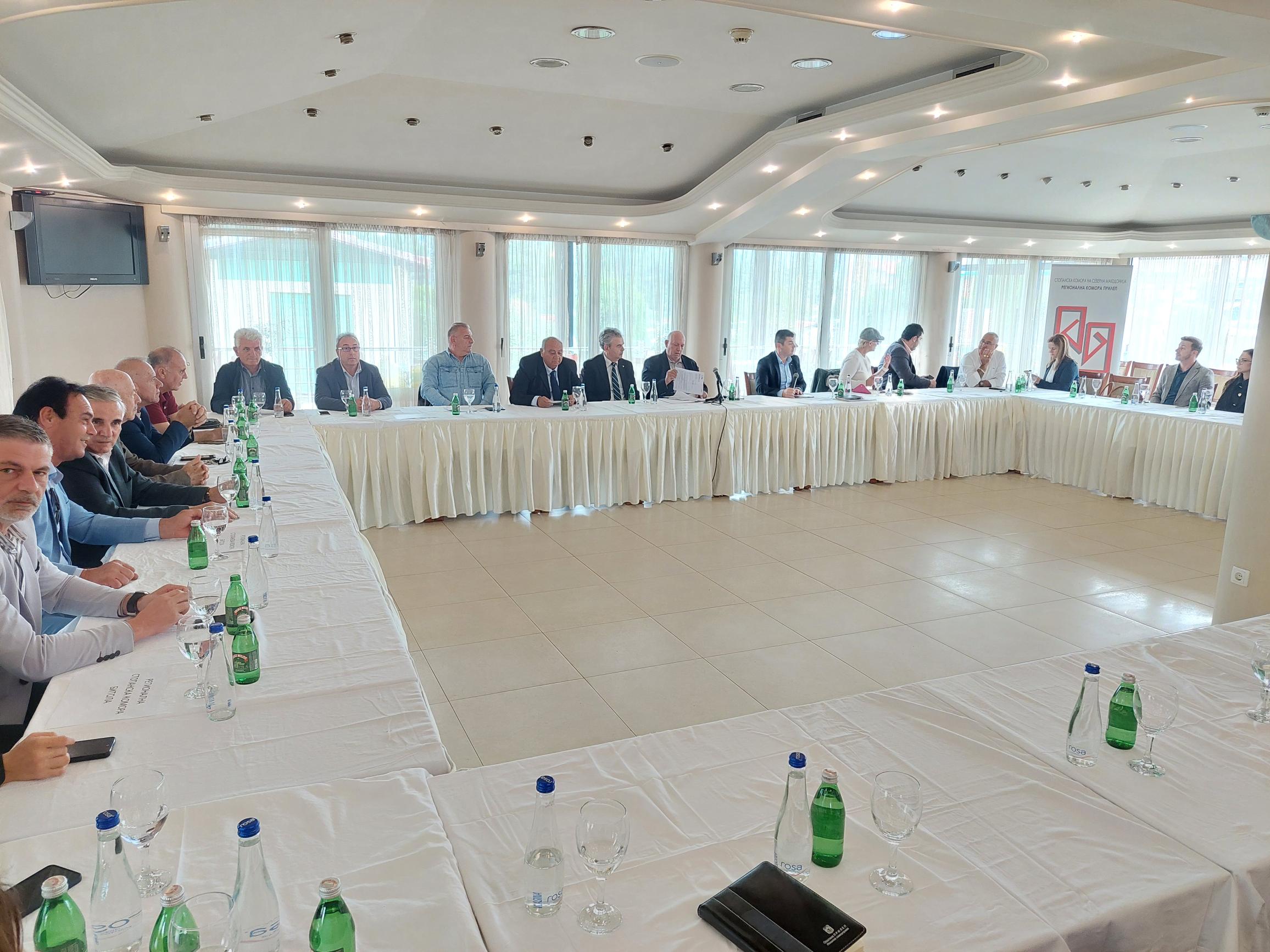
The hurdles facing companies in achieving stronger, higher-quality local economic development were the central focus of a meeting between Economic Chamber President Branko Azeski and business representatives from the regional chambers of Prilep, Bitola, and Kichevo, held in the presence of Prilep Mayor Dejan Prodanoski and members of the Chamber's Management Board.
A key challenge requiring immediate attention is the reform of the Law on Public Procurement. Several essential aspects must come to the forefront, notably prioritizing quality over the lowest price criterion and giving precedence to domestic over foreign enterprises. President Azeski stated that, in the interest of the business sector, the Chamber stands ready to support streamlining administrative processes and procedures for issuing various permits, documents, and licenses that state institutions must provide to ensure the smooth operation of businesses. Adopting the Chamber's recommendations would also reinforce efforts to combat corruption and accelerate process digitalization.
The meeting also addressed the non-working Sunday policy and the Law on Holidays, both of which require broader debate in the upcoming period given divergent viewpoints, opinions, and experiences.
.jpg)
The Prilep Regional Chamber put forward three key initiatives:
- Initiative to reduce or temporarily suspend customs duties on raw materials facing domestic production shortages during specific periods. The limited availability of local inputs, combined with high import tariffs, impedes the timely procurement of necessary quantities and constrains domestic firms' capacity to meet the demands of foreign buyers. In the long run, this dynamic risks the loss of existing export markets, reduced output, restricted business expansion, and a diminished capacity for job creation and export growth.
- Initiative to amend and improve legal frameworks governing sick leave, addressing the operational and financial toll that prolonged employee absences take on employers. Key pressures include: the need to reallocate workloads; hiring supplementary staff or covering overtime; disrupting the continuity of production processes; inflating operating costs; complicating client delivery deadlines; reducing overall enterprise productivity and efficiency; and placing additional strain on small and medium-sized enterprises. The initiative is not aimed at curtailing an employee's legitimate right to sick leave, nor does it question medical assessments. Rather, its objective is to establish a framework where justified medical leave is fully protected, while potential abuses are monitored and prevented more effectively.
- Initiative for the rehabilitation and upgrade of the Prilep–Rakle road corridor, an infrastructure priority vital to regional development. From the business community's perspective, road deterioration severely impacts transport operations and daily logistics, especially for enterprises relying on this route for hauling goods and raw materials.
Participants further concluded that high-quality, modern road and rail networks, along with the natural gas pipeline, are critical for the development of the Pelagonija–Prespa economic region, which contributes 14% to national GDP. Pelagonija and Prespa are home to 8,600 business entities, with the region recording 3.5% growth, rising exports, and 10 newly established companies.





 Progressive Academy