„Dimitrie Cupovski“ 13, 1000 Skopje +38923244000 ic@mchamber.mk
„Dimitrie Cupovski“ 13, 1000 Skopje +38923244000 ic@mchamber.mk
.jpg)
.jpg)
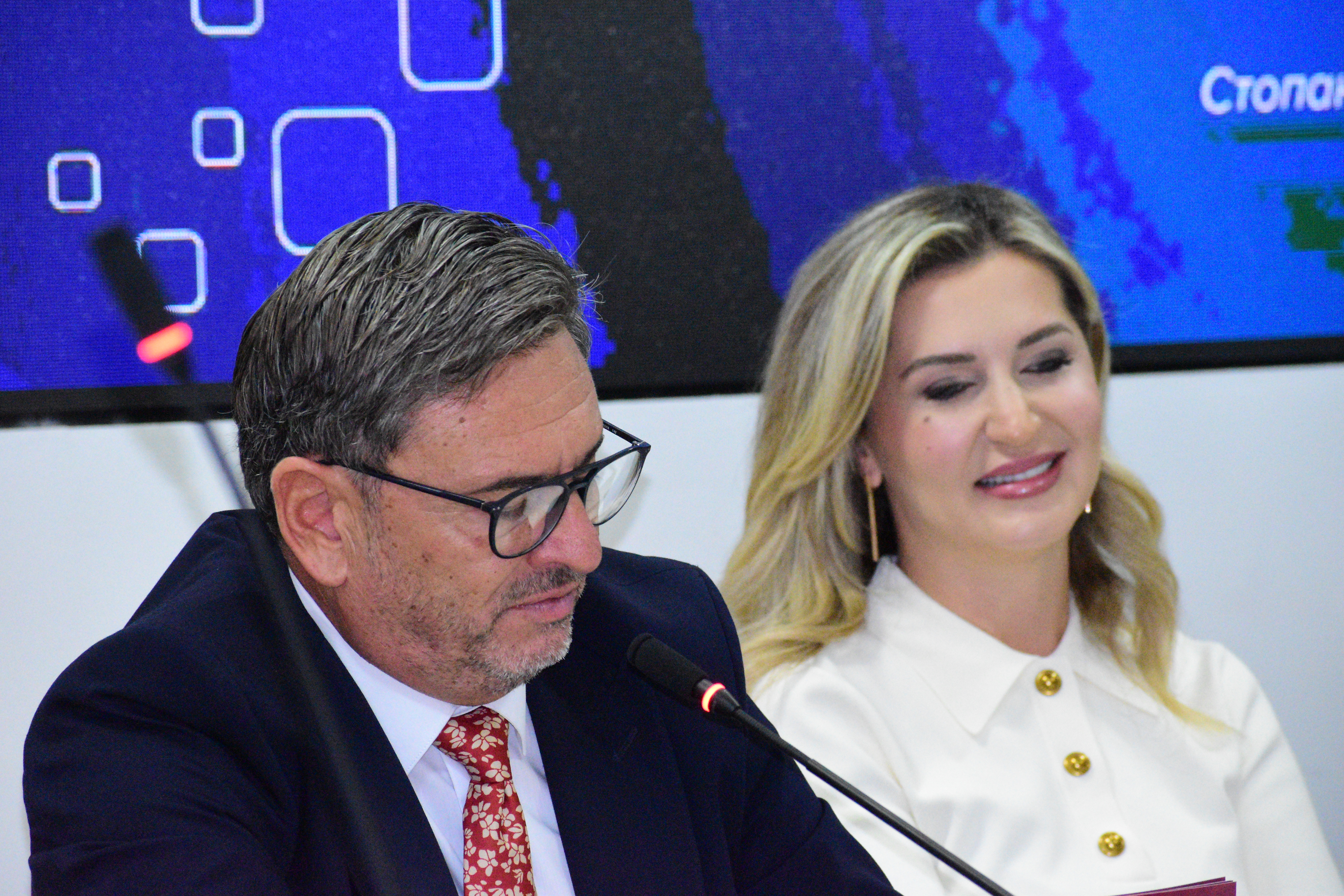
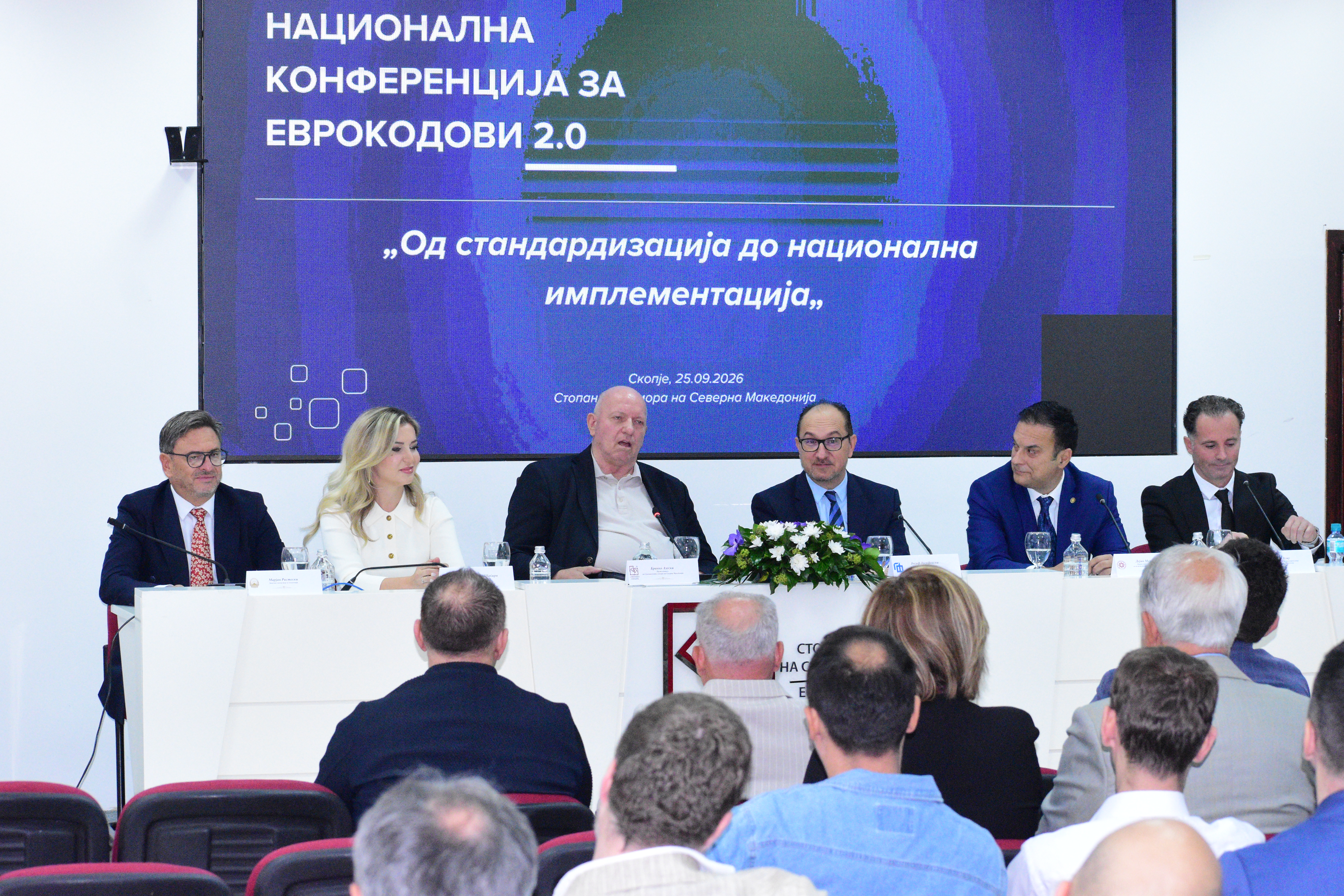
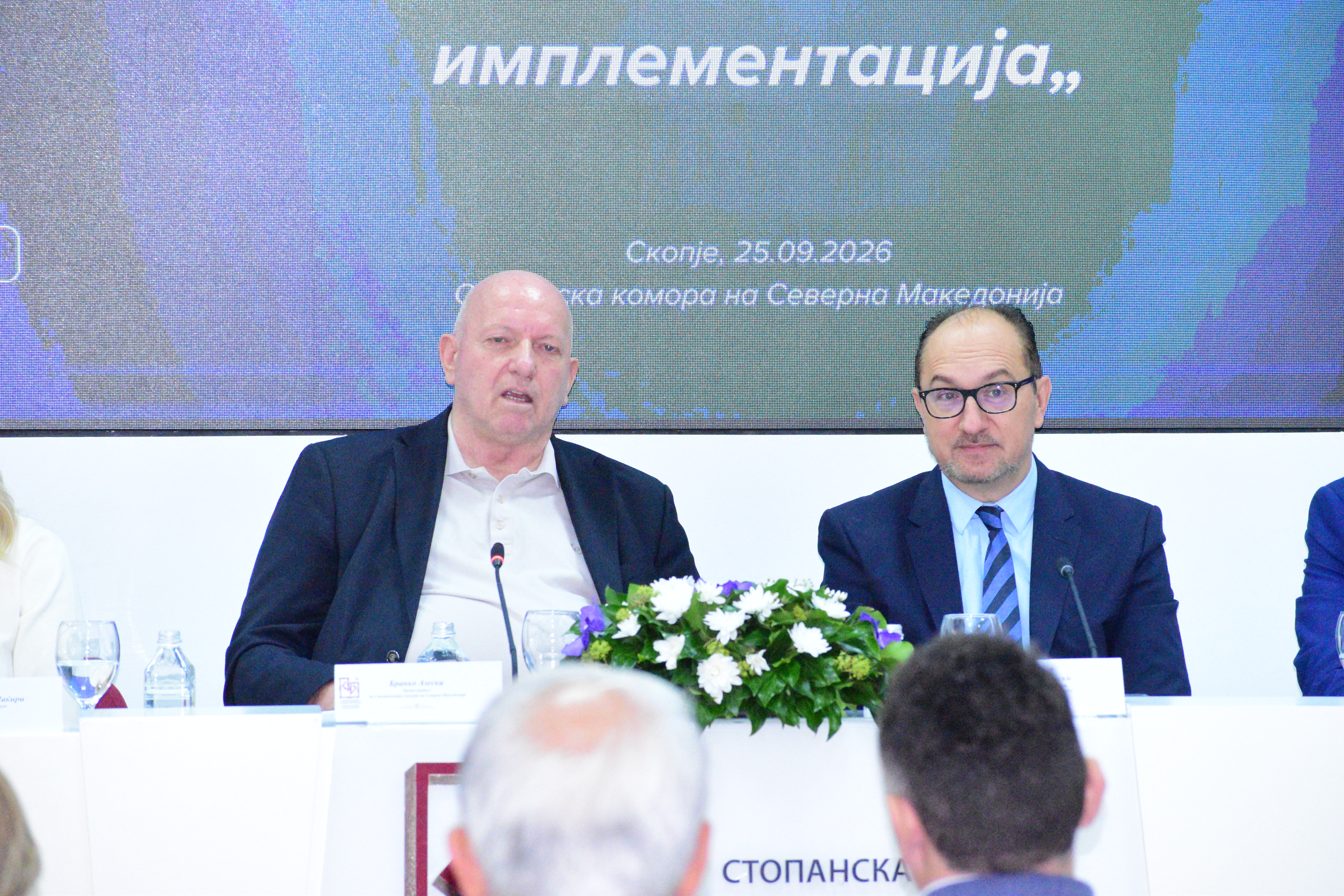
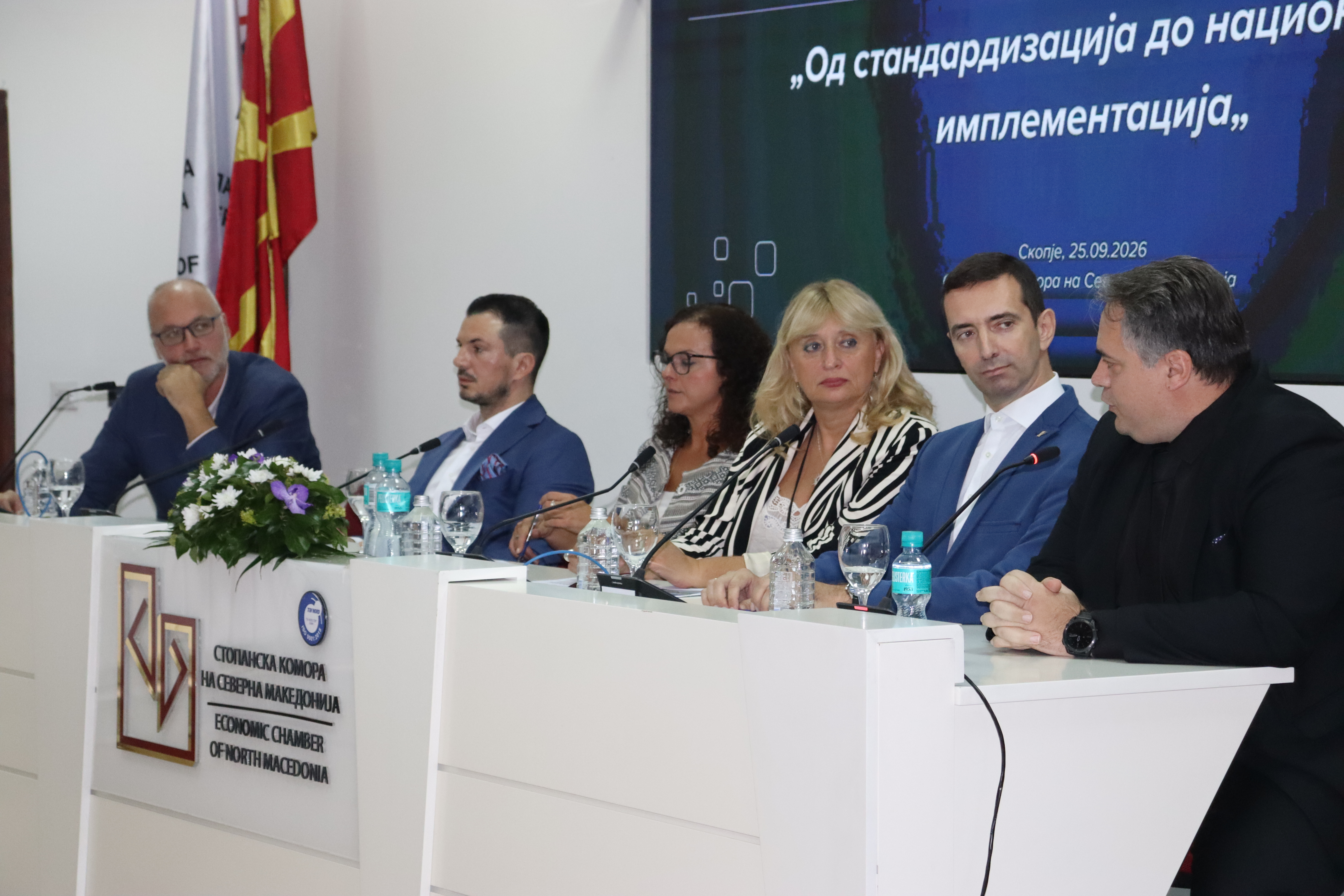
On 25 September 2026, the National Conference "Eurocodes 2.0 – From Standardization to National Implementation" was held at the premises of the Economic Chamber of North Macedonia, dedicated to the necessity of introducing and initiating the implementation process of the Eurocodes in the country as soon as possible.
The conference marked a major step toward aligning Macedonian engineering and construction practice with the latest EU standards. A particularly important highlight was convening key public institutions, academia, the engineering profession, and the construction industry in one venue as primary stakeholders in the successful adoption and practical rollout of the Eurocodes.
During the event, a Draft Initiative for the Implementation of the Second Generation of Eurocodes 2027–2030 was signed, whereby relevant institutions and organizations reaffirmed their commitment to coordinated cooperation throughout their introduction and enforcement.
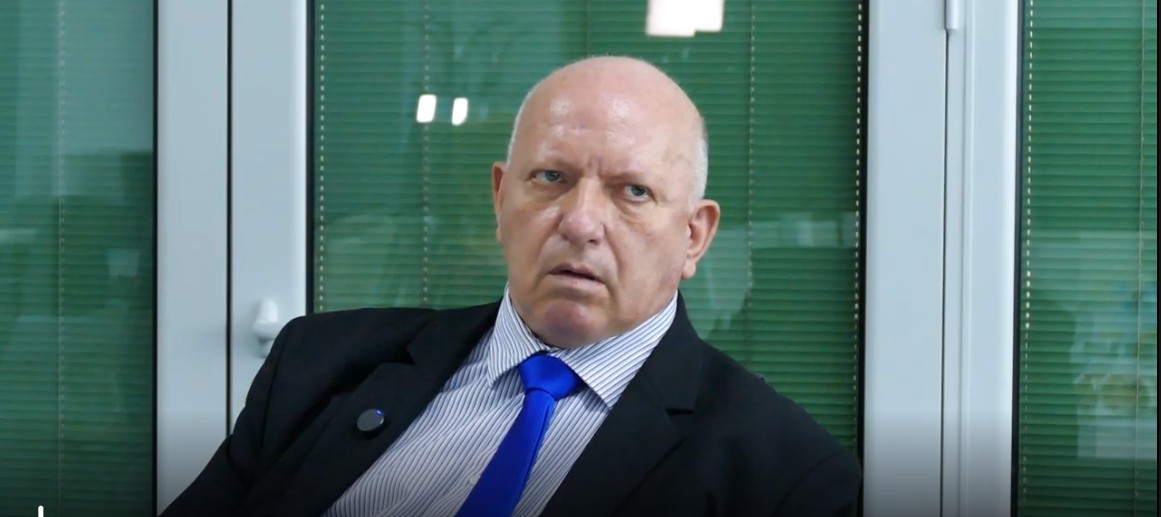
In his opening address, Branko Azeski, President of the Economic Chamber, emphasized that everything tied to adopting new standards serves as the baseline upon which both companies and line ministries must work to help the country keep pace with the EU market. He noted that the Chamber has consistently supported such initiatives, as a robust economy—particularly a developed construction sector—directly impacts the country's overall economic well-being.
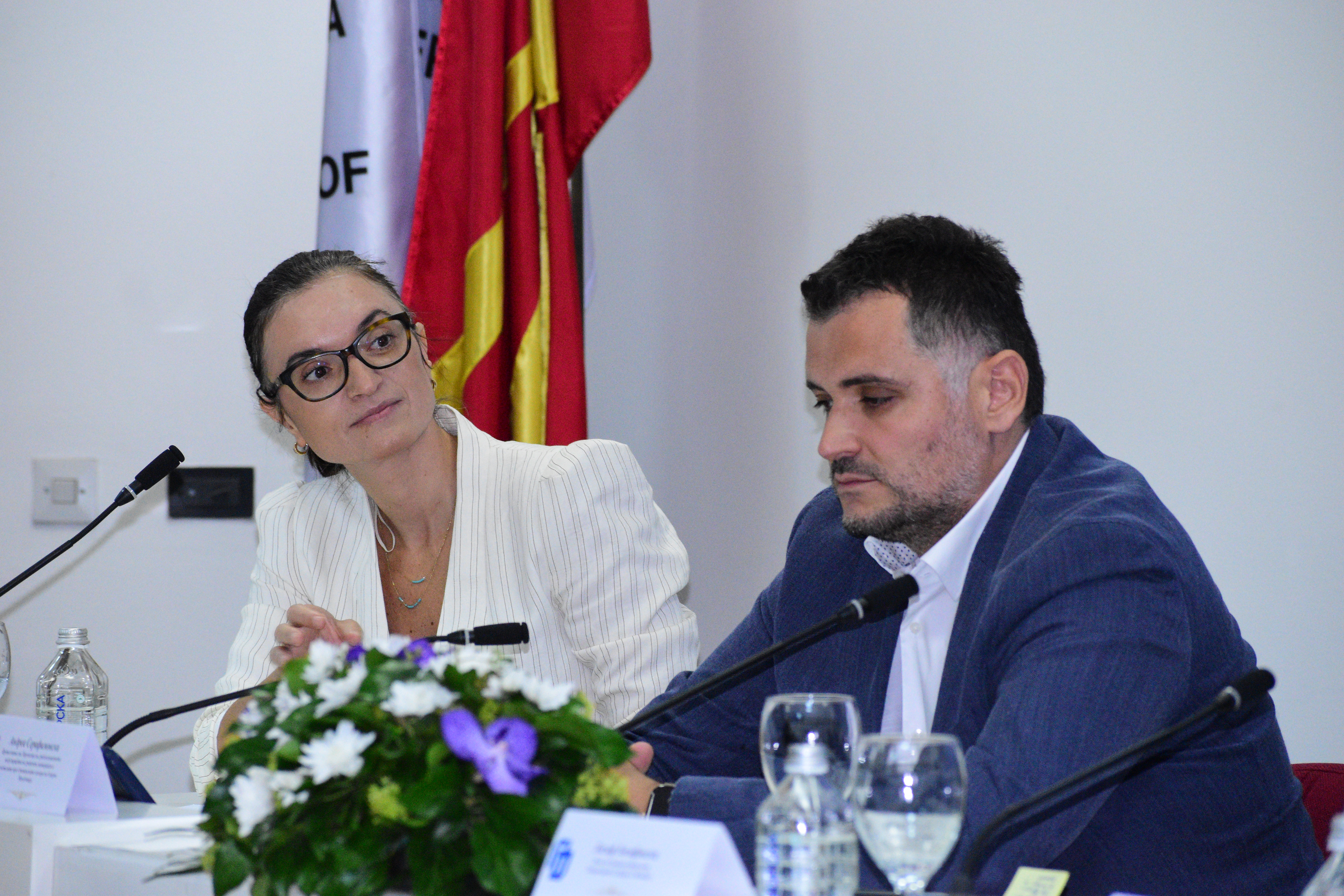
Andrea Serafimovski, President of the Association of Construction, Building Materials, and Non-Metal Industries at the Economic Chamber, pointed out that while introducing the Eurocodes will present clear challenges, the construction sector is fully prepared to take an active role in overcoming them and supporting a transition that fosters industry growth and development.
"We know the process involves many hurdles that must be cleared, but we are here to take all necessary steps so our engineers can master the Eurocodes more rapidly, and so the state can adopt them as national standards to keep pace with developments across Europe," Serafimovski stated ahead of the conference.
Addressing the need for a balanced understanding of the benefits of Eurocodes, Prof. Dr. Josif Josifovski, Dean of the Faculty of Civil Engineering, stressed that applying the Eurocodes does not automatically drive up construction costs; rather, it ensures safer and higher-quality building practices.
"The Eurocodes are flexible and allow costs to be defined based on project requirements. There is a general public perception that introducing Eurocodes imposes stricter standards that will inevitably raise construction prices, but that is not necessarily true. Our primary focus must always remain on quality and safety," Josifovski pointed out.
Addresses were also delivered by the Deputy Minister of Economy and the Deputy Minister of Transport, who underscored the value of their ongoing collaboration with the Economic Chamber and construction sector representatives. They noted that public institutions and industry share a common interest in establishing conditions for the further advancement of the construction sector, highlighting such initiatives as a foundation for continued coordination.
The introduction of the second generation of Eurocodes is a comprehensive undertaking that demands active engagement from all relevant stakeholders—from regulatory bodies and standardization institutes to academia, practicing engineers, and the enterprises directly applying these standards in daily operations.
With the signing of the Draft Initiative by the Faculty of Civil Engineering in Skopje, the Standardization Institute, the Chamber of Certified Architects and Certified Engineers (KOAI), and the Economic Chamber of North Macedonia, participants signaled that the process must be anchored in coordination, knowledge, and structured sectoral preparation, bringing Macedonian engineering and construction practices into full alignment with EU standards and contemporary building methodologies.



 Progressive Academy