„Dimitrie Cupovski“ 13, 1000 Skopje +38923244000 ic@mchamber.mk
„Dimitrie Cupovski“ 13, 1000 Skopje +38923244000 ic@mchamber.mk
.jpg)
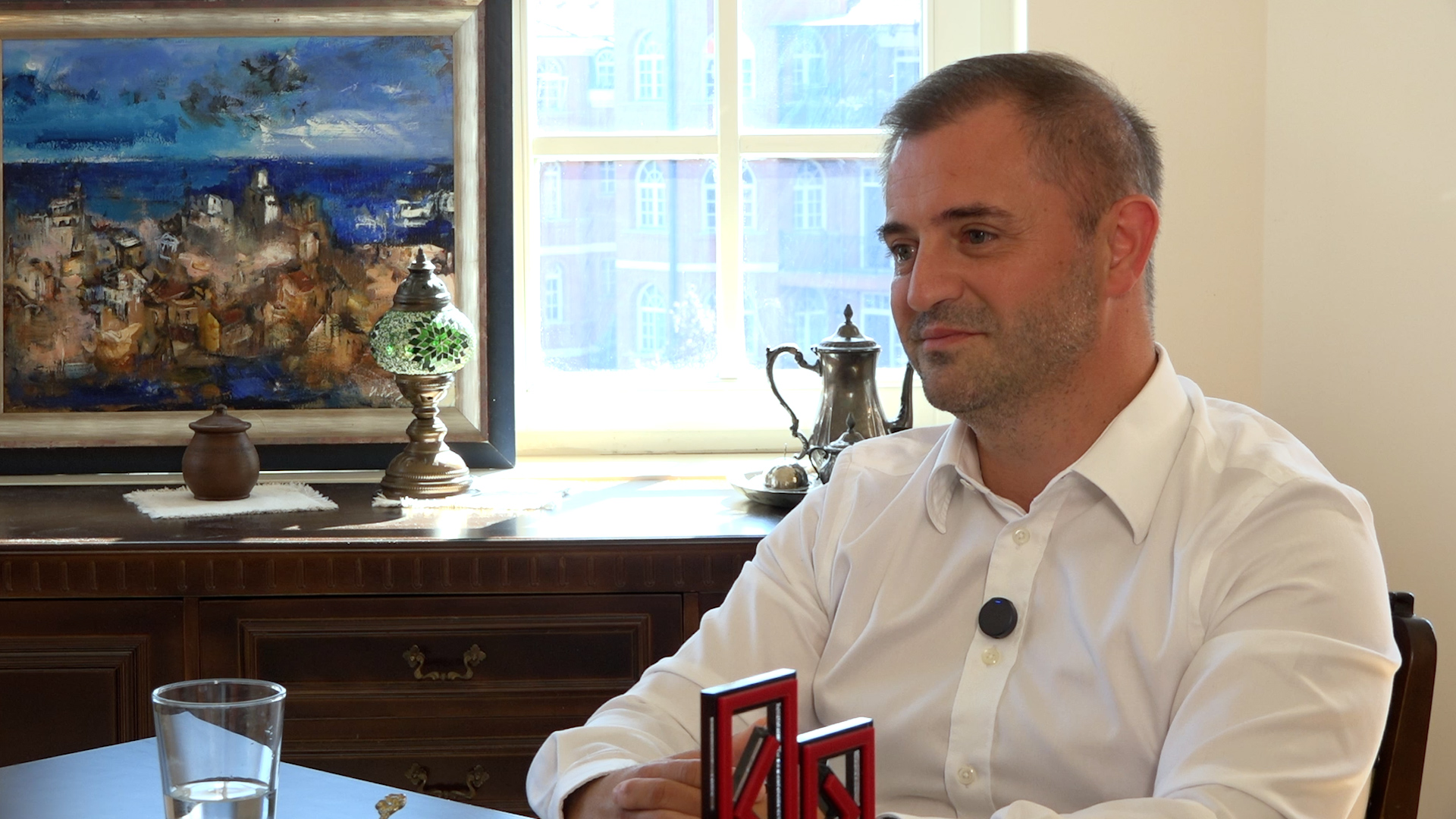
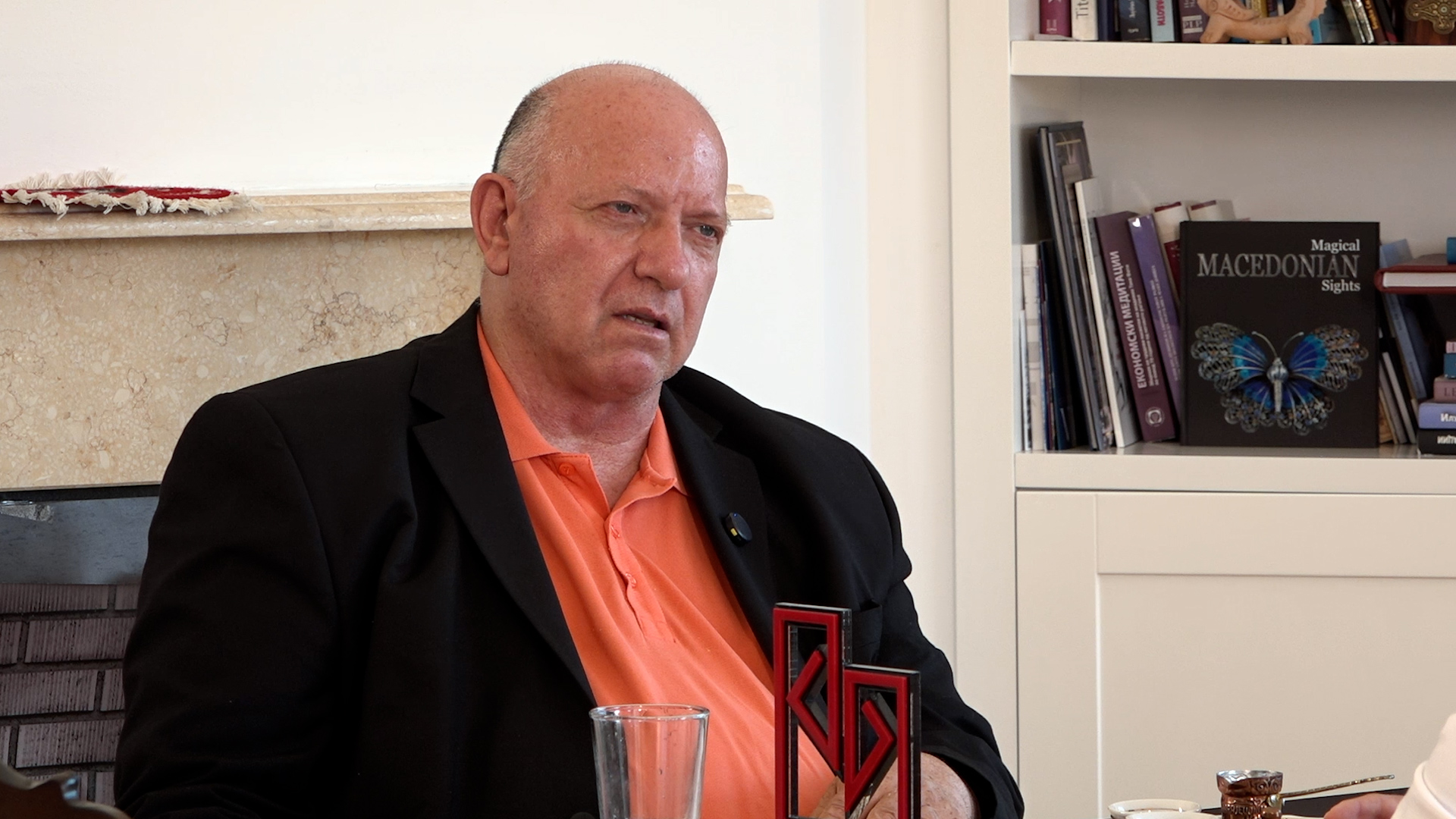
“The public sector should be encouraged to think long term, because business does not want uncertainty, but predictability,” said Kastriot Arifi, Strategy and Development Director at Tikveš Winery AD and the M6 Group, and a member of the Management Board of the Economic Chamber, in the latest episode of the Business Club podcast with the President of the Economic Chamber, Branko Azeski. In the show, he presented several key positions on improving the business climate, as well as on the functioning of the public sector.
The discussion covered the three issues on which the Chamber focuses its work: (1) resolving the issue of capital and labor; (2) correcting the structure of capital between engaged and non-engaged (inactive) persons; and (3) ensuring continuity of legislation during changes of government. In addition, other priorities the Chamber will work on were highlighted: (1) combating corruption and the grey economy; (2) accelerated construction of gas infrastructure; and (3) support for exports.
Arifi emphasized that in business cooperation, national affiliation is not important, but rather the common interest and the shared values, principles, and goals of both sides, which differ from political objectives.
“The Chamber is the best example of that,” Arifi said.
Asked about the efficiency of the public sector, which he believes has been reduced to a minimum, Arifi stressed that for every problem there is a solution, but there must be the will to solve it, continuity, and accountability.
“What differentiates us from the public sector is that business looks at things linearly and seeks sustainability, while public administration looks at things cyclically, from one election to the next. For us, as drivers of business, it is important that there is no uncertainty,” Arifi underlined.
According to him, alignment is necessary between the needs of the public sector and those of business.
“In the strategy documents prepared by the public sector, it is clearly specified what needs to be done to improve the business climate, but implementation is weak or entirely absent. Business is much faster in its activities, and productivity is necessary for companies to be able to grow,” he emphasized.
Arifi pointed out that Macedonia has low growth primarily due to the lack of inclusive growth. In his view, the country does not have a development-oriented economy based on exports of value-added products with a stronger domestic component.
Regarding the allocation of state subsidies, Arifi noted that they have both positive and negative sides. The positive side is the amount of subsidies, while the negative side is their misuse and the granting of unproductive subsidies that do not bring real progress and are based on an outdated model focused on inputs rather than real results (outputs) or innovation.
Asked about the preparation of development strategies for key sectors by international institutions, Arifi stressed that there is no logical explanation for this, because international institutions cannot care more about the country than we ourselves do. “What we lack is not capacity, but the will to do something better,” he added.
According to Arifi, the Government and state institutions should listen more to the voice of business, without politicization, because every solution proposed by the business community is interpreted as political.
“The public sector should be encouraged to think long term, because business does not want uncertainty, but predictability. The Chamber’s third principle should be respected — continuity of processes. Since 2020, 21 decisions have been adopted that have disrupted the business climate, and we need progress in order to grow as companies,” Arifi concluded.



 Progressive Academy