„Dimitrie Cupovski“ 13, 1000 Skopje +38923244000 ic@mchamber.mk
„Dimitrie Cupovski“ 13, 1000 Skopje +38923244000 ic@mchamber.mk

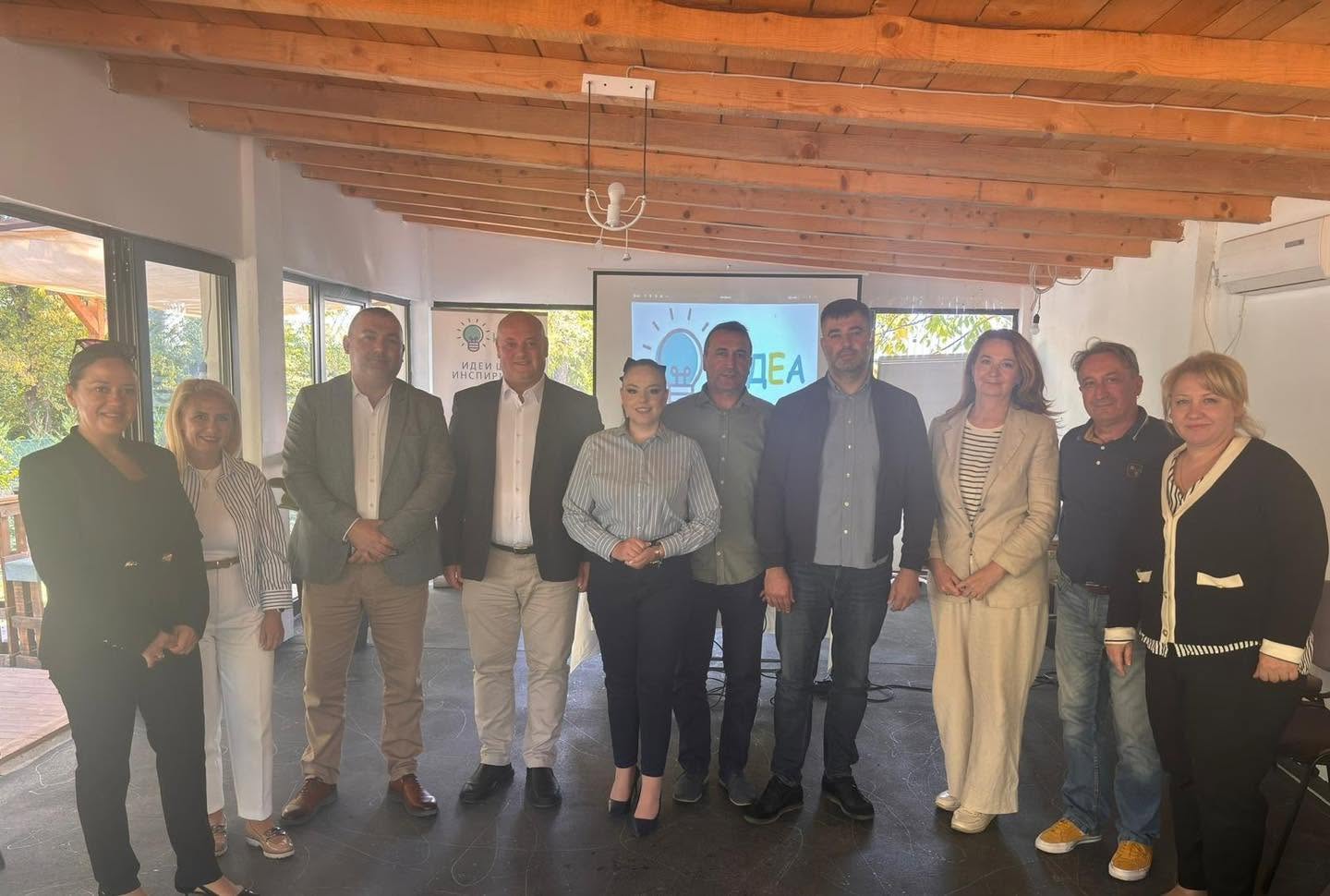
The Growth Plan for the Western Balkans, an initiative supported by the European Union, together with the National Reform Agenda, plays a key role in the country’s future economic development. These processes are not merely political or administrative—they provide direction that will shape the environment in which companies operate. For that reason, it is essential for the business community to clearly and promptly understand the mechanisms and goals behind these initiatives. With this in mind, a panel discussion was organized at the premises of the ECNM, where members and part of the Chamber’s management discussed how these reforms will impact the business climate and the country's economic progress.
Addressing the attendees, the President of the Economic Chamber, Branko Azeski, emphasized that this is one of the key issues requiring serious attention. In a time of global crisis and uncertainty at the international level, when countries face a series of challenges—primarily economic—it is important to recognize the efforts of the European Union in investing in the Western Balkan countries, offering direction and support for growth. Therefore, he said, it is our responsibility to reciprocate by supporting the EU accession processes.
.jpg)
On that path, one of the most important issues is addressing corruption and the grey economy, which is also highlighted as significant in the Reform Agenda. One of the ways progress can be made in this area is through digitalizing processes—an area in which the country is already making progress across four reform pillars. As in many of his previous addresses, the President of the Chamber stressed that implementation has been lacking for a long time. He further noted that Macedonia will face additional economic pressures due to the EU’s safeguard measures on steel imports. Under the Stabilization and Association Agreement, the country has requested postponement of these measures due to their expected negative economic impact. Despite all challenges, Azeski emphasized that the business sector sees its development path within the EU family, where the economy is predominantly export-oriented, highlighting that infrastructure and the judiciary should remain top priorities.
Deputy Minister for European Affairs Viktorija Trajkov addressed the audience, presenting the institutional view and EU perspective. Steffen Hudolin, Head of Cooperation at the Delegation of the European Union to North Macedonia, informed participants that the Growth Plan is intended to support reforms in Western Balkan countries specifically in areas where the weaknesses are greatest.
The event continued with a panel discussion. Dragan Tilev, Advisor to the Minister for European Affairs and member of the Office, presented the key elements of the Growth Plan for the Western Balkans and the National Reform Agenda, including the steps required, the timeline for implementation, and the financial framework. Stefan Andonovski, Minister for Digital Transformation, spoke about the activities undertaken by the Ministry within the Reform Agenda, as well as ongoing projects and initiatives that form part of the Growth Plan. The Ministry has already achieved notable progress in this regard, and the resulting digitalization—expected to modernize the business environment—will directly benefit the business sector. Stefan Ristovski, researcher at the European Policy Institute (EPI) – Skopje, offered an assessment of the implementation rate of the Growth Plan and the Reform Agenda across the region, noting that there is still substantial work ahead for all countries and that the pace of reforms must accelerate. The panel also featured Gligor Cvetanov, in his capacity as President of the Chamber’s newly formed Europe Club, who explained the purpose of this new initiative and underscored the Chamber’s commitment to actively participating in the processes connected to EU integration. The panel was moderated by Zoran Jovanovski of the Economic Chamber.
.jpg)
The Growth Plan for the Western Balkans represents an offer from the European Union to candidate countries for EU membership (Albania, Bosnia and Herzegovina, Kosovo, Montenegro, North Macedonia, and Serbia) with the aim of accelerating their accession process, enabling faster integration into the EU Single Market, and strengthening regional economic cooperation. To support these reforms, a fund of €6 billion has been secured—€2 billion in grants and €4 billion in concessional loans. A prerequisite for accessing these funds is the implementation of specific reforms and alignment of national legislation with EU law.
The Growth Plan focuses on seven strategic areas: free movement of goods, services, and labor; access to euro-denominated payments; facilitation of road transport; decarbonization and integration of energy markets; creation of a common digital market; and integration into industrial supply chains.
The Growth Plan covers the period from 2024 to 2027, and the allocated funds will be distributed based on a formula that considers GDP, population size, and other relevant criteria.

 Progressive Academy