„Dimitrie Cupovski“ 13, 1000 Skopje +38923244000 ic@mchamber.mk
„Dimitrie Cupovski“ 13, 1000 Skopje +38923244000 ic@mchamber.mk
.jpg)
000.jpg)
.jpg)
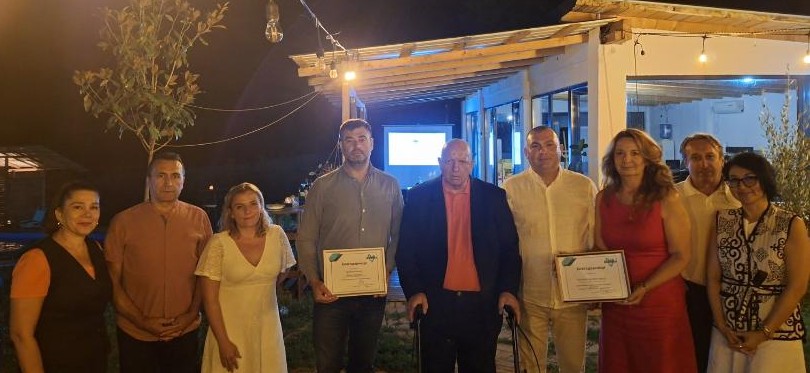
At the Economic Chamber, in cooperation with the Regional Challenge Fund (RCF), a grant worth €495,350 was awarded for equipment, machinery, and infrastructure for the Faculty of Agriculture at the Goce Delchev University in Shtip and the secondary vocational school Kocho Racin Secondary School, Sveti Nikole. The funds will support practical training within the dual education system and the expansion of its cooperative training program involving six companies. The activity forms part of efforts to strengthen the sustainable competitiveness of businesses in the Western Balkans Six on their path toward the EU Single Market. The purpose of the event was also to recognize the people and partnerships shaping the future of vocational skills development in North Macedonia.
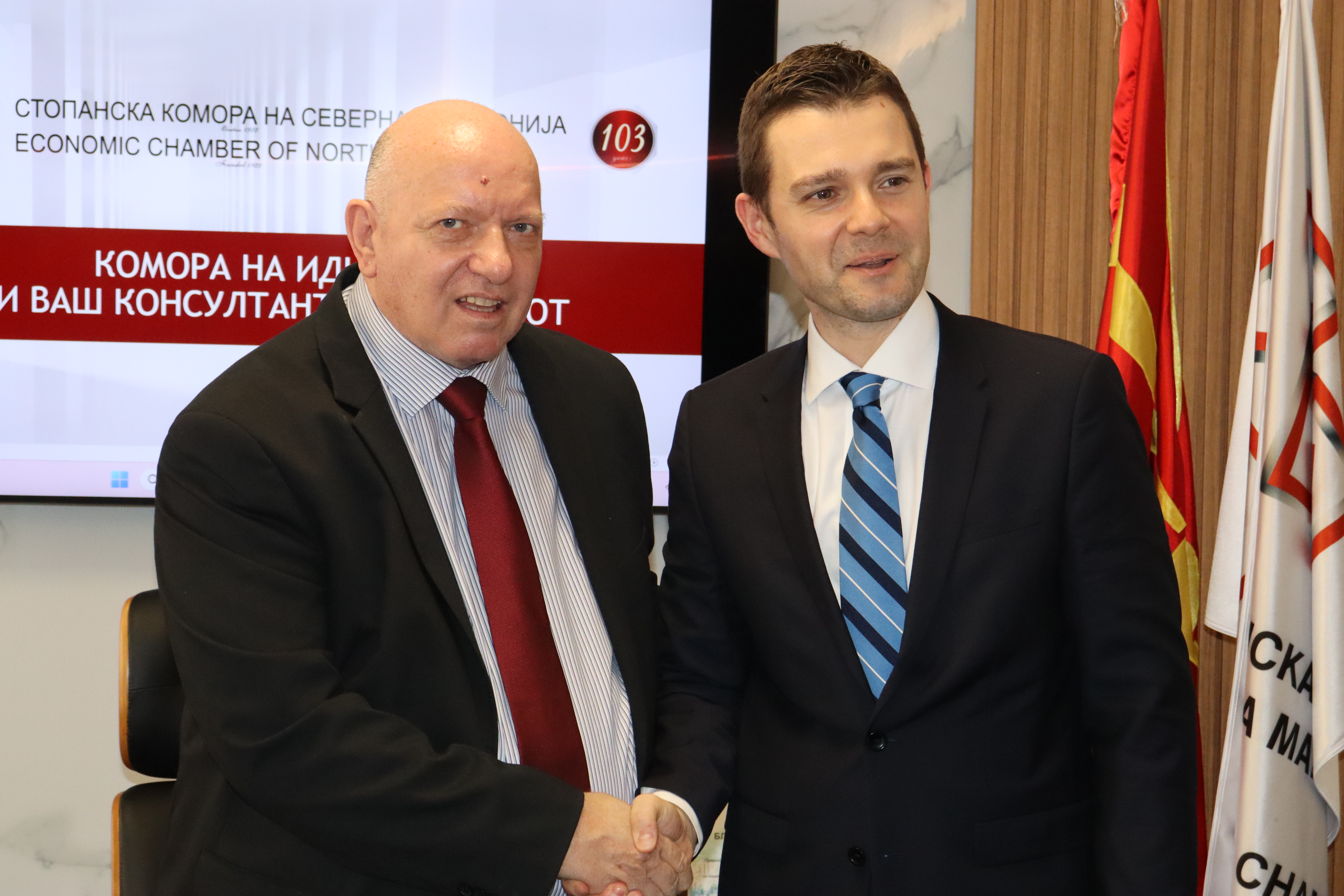
“Deep gratitude goes to German Ambassador to Macedonia Petra Drexler, to Moritz Remé, Director of the KfW Development Bank office in North Macedonia and Kosovo, and to Michal Harari, Deputy Head of Mission at the Swiss Embassy, who recognized the need to support the dual education process in both secondary vocational and higher education,” said Branko Azeski, President of the Economic Chamber. He added that the goal is to equip graduates and university students with practical skills through workplace learning and work-based training, which is one of the Chamber’s three strategic priorities: creating a workforce aligned with the real needs of the economy, improving exports, and strengthening regional cooperation. “The process has been supported through the Western Balkans 6 Chamber Investment Forum (WB6 CIF), which changed the overall way we think. I believe we have done a great deal for business development in the Western Balkans, particularly in terms of connectivity and joint access to third markets, which in turn encouraged investment in creating skilled labor for their own needs,” Azeski said at the event announcing the winner of the fourth grant call.
Beyond financial contributions, German Ambassador Drexler spoke about the broader mission of the Regional Challenge Fund — fostering skills that will ensure the Western Balkans remains a vital and resilient part of the EU family. “We must strengthen local economies, invest in skills, and build supply chains that are less vulnerable to global disruptions. As Germany, together with Switzerland, we are proud to support this partnership. I thank all our partners for their strong commitment. Together, we are building a stronger Europe,” she said. Swiss Deputy Head of Mission Michal Harari highlighted the broader ambition behind Switzerland’s contribution to the Fund — not only investing in infrastructure, but also promoting cooperation between schools and employers that gives young people a real place in the labor market. She noted that cooperation between educational institutions and the private sector enables young people to gain skills aligned with company needs, opening access to better jobs and creating a more competitive private sector with skilled labor. Switzerland, she added, remains committed to cooperation with North Macedonia in this area.
Vesna Janevska, Minister of Education and Science of North Macedonia, said students have recognized the value of entering the labor market or higher education prepared not only with theoretical knowledge, but also with practical skills. As a result, the number of students enrolled in dual-education classes in vocational secondary schools has been rising year after year. “I also thank both the German and Swiss embassies for helping change perceptions of vocational secondary education,” she said.
Emphasizing the lasting value of professional craftsmanship, KfW Country Director Moritz Remé explained why human skills remain the ultimate competitive advantage in the age of artificial intelligence (AI). “We are entering an age shaped by rapid technological change, including the rise of AI. In this development, skilled workers remain not only relevant, but essential. While artificial intelligence improves efficiency, it cannot replace hands-on experience, practical judgment, and human adaptability in real-life conditions. AI will increasingly serve as a support tool for such work, but it will not replace it,” Remé said.
The closing message of the event was clear: real change happens through cooperation. With every new partnership it supports, the Regional Challenge Fund helps create a workforce that is better prepared, more adaptable, and more closely aligned with the needs of the economy — creating long-term opportunities for both businesses and future generations.
Through four open calls, RCF has awarded a total of €7.63 million to 17 projects in North Macedonia, involving 88 partner companies together with 12 vocational schools and five faculties.
Under the fourth call for project proposals, 187 expressions of interest were submitted across all six Western Balkan economies, 14 of them from North Macedonia. Based on available resources, the selection committee decided to finance one project from North Macedonia with a total value of €495,350. These funds will be used to improve educational infrastructure and provide training for participants in cooperative education programs.
The Regional Challenge Fund (RCF) is a financial mechanism aimed at increasing the competitiveness of enterprises in the Western Balkans Six by financing investments in equipment and infrastructure for dual and vocational education projects developed through partnerships between vocational institutions and businesses. Grants are awarded through a competitive regional challenge process.
The Federal Ministry for Economic Cooperation and Development provided €73.4 million to the RCF, while the Swiss government, represented by the Swiss Agency for Development and Cooperation (SDC), co-financed an additional €10 million. The funds were entrusted to KfW Development Bank and implemented by the WB6 CIF as a joint initiative of chambers of commerce from across the region.



 Progressive Academy